
Use EraGuessr as a 15–30 minute observation and discussion activity, not as a replacement for historical sources. Have students record evidence before guessing, compare reasoning after the reveal, and verify one claim with a reliable source.
What to know
- The strongest learning objective is evidence-based reasoning: students explain why a clue supports a place or period.
- Small groups can separate roles—observer, mapper, timeline keeper, and skeptic—to make the activity collaborative.
- Gameplay scenes should be treated as illustrations and checked against reliable sources during follow-up.
Three classroom formats
| Question | Suggested flow | Best use |
|---|---|---|
| 10-minute warm-up | Play one scene, collect two clues, vote on place and century, then reveal. | Activating prior knowledge or introducing a unit. |
| 25-minute team challenge | Groups play three scenes with assigned roles and written evidence. | Practicing reasoning, discussion, and map literacy. |
| 45-minute source check | Play three scenes, then verify one reveal claim and one visual detail using reliable sources. | Historical sourcing, media literacy, and reflection. |
Choose a learning goal before starting
A game becomes instruction when the task produces evidence you can discuss. “Get the highest score” is motivating, but it is not enough on its own. Choose one goal: interpreting visual evidence, using latitude and physical geography, building chronological ranges, or evaluating the reliability of reconstructed images.
Tell students that an accurate answer with no reasoning is less useful than a defensible answer that turns out to be wrong. This keeps knowledgeable students from dominating through recall and gives observant students a meaningful entry point.
A 25-minute lesson flow
The activity works on a shared screen or on student devices. No player account is required. For younger groups or limited time, the teacher can control the map and timeline while students supply evidence.
- Minutes 0–3: explain the four clue families—architecture, landscape, technology, and clothing—and identify gameplay scenes as illustrations.
- Minutes 3–6: inspect the first scene silently. Each student writes one location clue and one time clue.
- Minutes 6–10: groups agree on a map region, date range, and confidence level before entering one pin and year.
- Minutes 10–13: reveal the answer. Compare the class evidence with the distance and time gaps.
- Minutes 13–21: repeat with two scenes, rotating the student who must challenge the group's first guess.
- Minutes 21–25: exit ticket—name one transferable clue and one visual detail that should be verified.
Prompts that move beyond guessing
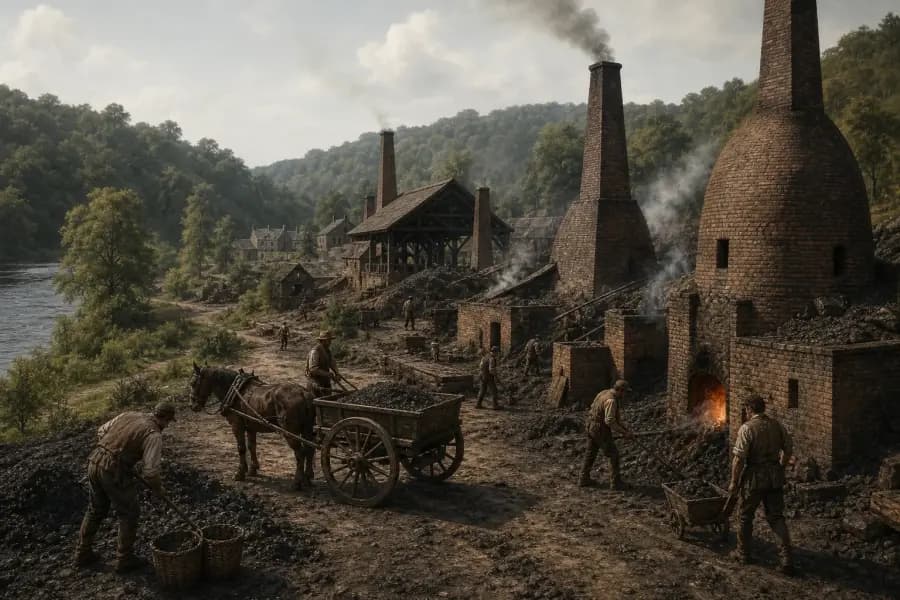
Ask questions that expose the reasoning process. Which clue carried the most weight? What alternative location did the group reject? Which missing technology influenced the latest possible date? What part of the illustration might be an artistic choice rather than historical evidence?
After the reveal, ask students to separate facts supplied by the game from interpretations they made themselves. This distinction supports both historical thinking and careful use of historical illustrations.
Differentiate without changing the game
Give novice students a continent list, broad era labels, or a clue checklist. Ask more advanced students to give an uncertainty range, identify conflicting evidence, or explain which clue would be strongest if verified. Multilingual learners can begin by labeling visible objects before turning observations into geographic claims.
For accessibility, read essential labels aloud, allow extra inspection time, and avoid making color the only way a clue or score is communicated. Small groups also reduce the motor demands of placing an exact map pin.
A lightweight assessment rubric
Score the reasoning separately from the game's points: one point for a specific observation, one for connecting it to place, one for connecting evidence to time, and one for acknowledging uncertainty or a competing explanation. A four-point rubric is quick enough to use during discussion.
For a follow-up assignment, have students choose one scene and create a corrected caption supported by two reliable sources. The final product should identify what the illustration communicates well and what it cannot establish.
Frequently asked questions
What age group is EraGuessr suitable for?
The observation format can work across age groups, but teachers should preview scenes and adjust vocabulary, time range, and source-checking expectations for their students.
Do students need accounts?
No. Quickplay and daily challenges can be opened in a browser without individual player accounts.
Should gameplay illustrations be used as historical sources?
No. They are prompts for observation and hypothesis. Students should verify historical claims and visual details with reliable primary or secondary sources.
Put the clue method into practice
Play five scenes, then use the reveal to compare your strongest location clue with your strongest time clue.