
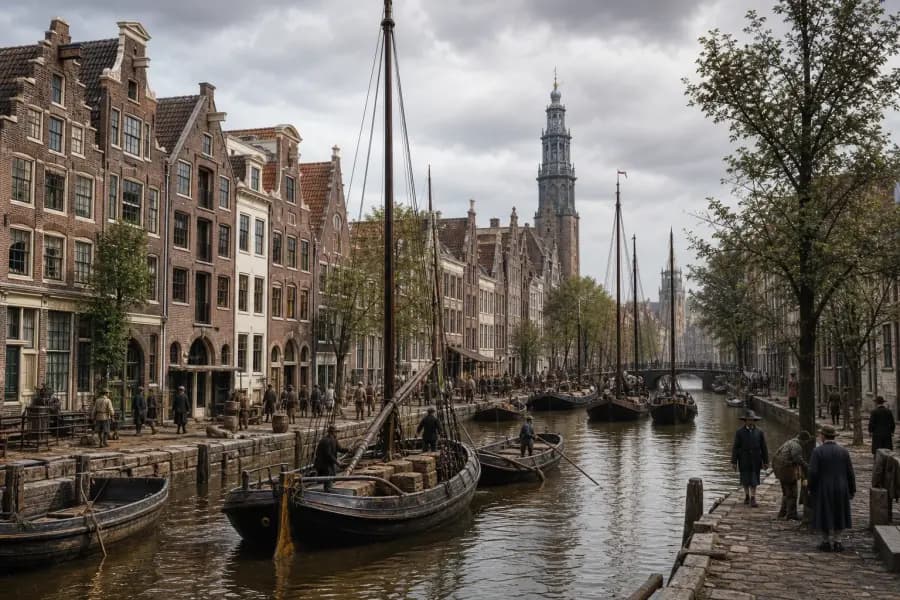
Choose a GeoGuessr-style game if you mainly want modern location recognition from street-level imagery. Choose EraGuessr if you want each scene to test two questions—where it belongs and when it happened—with a historical explanation after the guess.
What to know
- The core difference is a second scoring axis: EraGuessr awards points for both map distance and year accuracy.
- The image sources differ: GeoGuessr is known for modern Street View; EraGuessr uses illustrated historical scenes.
- Neither format is universally better. The right choice depends on whether you want geographic recognition, historical deduction, or both.
GeoGuessr-style games and EraGuessr at a glance
| Question | EraGuessr | GeoGuessr-style games |
|---|---|---|
| Main question | Where is the scene, and what year does it represent? | Where in the world is this modern view? |
| Typical imagery | Illustrated historical scenes from across eras. | Modern street-level or panoramic photography. |
| Useful clues | Architecture, terrain, materials, clothing, transport, and technology. | Road markings, signs, vegetation, driving side, camera coverage, and language. |
| Scoring | Up to 2,500 map points plus 2,500 timeline points per round. | Usually based primarily on distance from the correct location. |
| Best for | History fans, visual deduction, chronology practice, and mixed map-and-time challenges. | Modern geography practice, travel recognition, and precise geolocation. |
The gameplay difference is bigger than one extra slider
A location-only round asks you to identify a place from visible geography. EraGuessr keeps that satisfying map decision, but a close location guess is only half of a perfect round. You must also decide whether the scene belongs in antiquity, the medieval world, the industrial era, or a much narrower modern window.
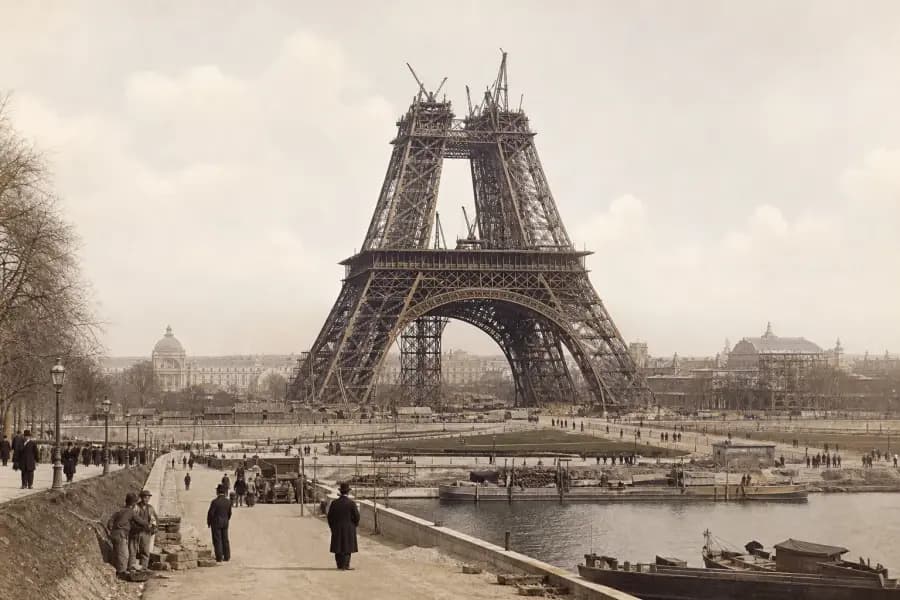
That changes how you inspect an image. A stone bridge may suggest a region, but its construction method, surrounding transport, and nearby clothing can change the date by centuries. A skyline may be geographically obvious while its stage of construction provides the more difficult timeline clue.
The clue vocabulary overlaps, then branches
Both formats reward careful observation. Terrain, architecture, vegetation, and language can all narrow a location. EraGuessr then asks a second set of questions about what technologies are present, which materials dominate, how dense the settlement is, and whether a landmark looks newly built, damaged, or restored.
- Architecture: building form can indicate both region and period.
- Landscape: coastlines, river valleys, mountains, and climate remain strong location clues.
- Technology: railways, electric lighting, aircraft, cars, and construction equipment tighten the date range.
- Clothing and public space: silhouettes, uniforms, crowds, and street layouts provide supporting evidence rather than a single guaranteed answer.
Learning value and source expectations
Modern photographic games are excellent for learning how the present-day world looks. EraGuessr is better treated as a reasoning game and conversation starter, not as a primary historical source. Historical illustrations can simplify details, which is why post-round explanations and source information matter.
A useful round does not require expert recall. The reveal shows the correct location and year, the distance and time gap, and a short explanation. The goal is to make the next visual judgment better, not merely to mark an answer wrong.
Which one should you play?
Play both if you enjoy visual deduction: they train different instincts. Choose modern geolocation when you want authentic present-day imagery and fine-grained place recognition. Choose EraGuessr when the most interesting question is how place changes through time, or when you want a short history challenge that still uses a real map.
For a fair test, play one five-round EraGuessr game and compare your map score with your timeline score. The split immediately shows whether your stronger instinct is spatial or chronological.
Frequently asked questions
Is EraGuessr affiliated with GeoGuessr?
No. EraGuessr is an independent history game. GeoGuessr is a trademark of its owner, and the comparison describes two different guessing formats.
Does EraGuessr use Google Street View?
No. EraGuessr uses historical scene illustrations, with inspiration and attribution information shown after scoring when available.
Do I need to know exact historical dates?
No. Timeline scoring gives partial credit for close estimates, with broader tolerance for older history. Visual reasoning is more important than memorizing every date.
Put the clue method into practice
Play five scenes, then use the reveal to compare your strongest location clue with your strongest time clue.